Baked Salmon with Potatoes and Asparagus: A One-Pan Dinner You’ll Love
Baked Salmon with Potatoes and Asparagus: A One-Pan Dinner You’ll Love
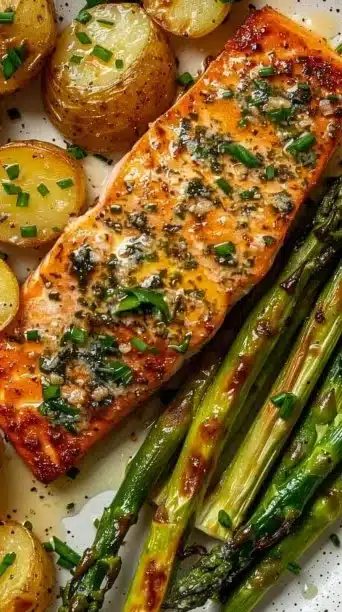
This one-pan baked salmon with potatoes and asparagus is a weeknight lifesaver—simple, bright, and packed with flavor. Tender, flaky salmon meets crisp-roasted baby potatoes and vibrant asparagus for a balanced meal that practically cooks itself. If you appreciate fuss-free dinners that still look and taste special, this recipe will quickly become a go-to. For a great companion side technique, try the baked Parmesan potatoes recipe which pairs beautifully with this dish.
Why make this recipe
If you’re tired of spending an hour over the stove and still ending up with scattered pans and a sink full of dishes, this recipe is perfect because it consolidates the whole meal onto one baking sheet. You get a healthy, balanced plate—protein, starch, and vegetables—without constant monitoring, and the flavor comes together with minimal seasoning and a quick prep.
Ingredients
- 4 salmon fillets
- 1 pound baby potatoes
- 1 bunch asparagus, trimmed
- 3 tablespoons olive oil
- 3 cloves garlic, minced
- 1 tablespoon lemon juice
- 1 teaspoon paprika
- 1 teaspoon dried oregano
- 1 cup shredded mozzarella or Parmesan cheese
- Salt and black pepper, to taste
- Fresh parsley, for garnish
- Lemon wedges, for serving
Step-by-Step Guide to Making Baked Salmon with Potatoes and Asparagus
Overview and prep tips before you start
- Preheat the oven to 400°F (200°C) so it reaches temperature while you prep—consistent heat is what gives the potatoes a golden exterior and the salmon a gentle, even finish.
- Use baby potatoes about the size of a small egg for even roasting; if the potatoes are larger, halve them so they cook through in the same time as the salmon.
- Trim the asparagus and pat everything dry before tossing with oil—moisture on the surface will steam instead of roast.
Step 1 — Prep the baking sheet
Line a large baking sheet with parchment paper or foil for easier cleanup. If using foil, lightly oil it so the potatoes don’t stick.
Step 2 — Season and roast the potatoes
Toss the baby potatoes with 1–2 tablespoons of olive oil, half the minced garlic, a generous pinch of salt, and black pepper. Spread them in a single layer on one side of the baking sheet. Roast the potatoes for about 20 minutes at 400°F, turning once halfway through, until they begin to soften and develop golden edges.
Step 3 — Prepare the salmon
While the potatoes start roasting, pat the salmon fillets dry and arrange them skin-side down (if skin is on) on a plate. Drizzle with the remaining olive oil and lemon juice. Sprinkle the minced garlic, paprika, dried oregano, salt, and pepper evenly over each fillet. Let the salmon sit for a few minutes so the flavors settle in.
Step 4 — Toss the asparagus
Trim the woody ends off the asparagus stalks and toss them with a little olive oil, salt, and pepper. Keep them separate from the potatoes until the potatoes have had that initial 20-minute roast—this prevents the asparagus from overcooking.
Step 5 — Assemble and bake
When the potatoes have roasted 20 minutes and are beginning to brown, push them slightly to the side of the sheet to create room for the salmon and asparagus. Place the seasoned salmon fillets on the baking sheet and add the asparagus in a neat cluster. Return the tray to the oven and bake everything together for 12–15 minutes, depending on salmon thickness—salmon should flake easily and reach an internal temperature of about 125–135°F (for medium doneness) or up to 145°F if you prefer fully cooked.
Step 6 — Cheese finish
In the last 5 minutes of baking, sprinkle the shredded mozzarella or Parmesan over the roasted potatoes so it melts and forms a savory golden crust. This small step adds texture contrast and a touch of richness.
Step 7 — Rest and garnish
Remove the pan from the oven and let the salmon rest 2–3 minutes; resting lets juices redistribute so the fillets stay moist. Garnish with freshly chopped parsley and lemon wedges before serving.
Serving note: A squeeze of lemon over the salmon just before eating brightens the dish and ties the flavors together.
Best Way to Store Baked Salmon with Potatoes and Asparagus: Storage Tips
- Refrigeration: Store leftovers in an airtight container in the refrigerator for up to 3 days at 40°F (4°C) or below.
- Freezing: For longer storage, place cooled portions in a freezer-safe container or heavy-duty freezer bag and freeze for up to 1 month at 0°F (-18°C). Thaw overnight in the refrigerator before reheating.
- Reheating: Reheat gently in a 325°F oven for 10–12 minutes or until warmed through to avoid drying the salmon. Avoid microwaving for long periods; use short bursts if necessary.
Serving Suggestions for Baked Salmon with Potatoes and Asparagus
- Family-style: Serve the salmon fillets whole on the baking sheet with lemon wedges and a scattering of parsley so everyone can help themselves.
- Plate presentation: For a restaurant touch, place a salmon fillet at the center of the plate, a scoop of the cheesy roasted potatoes to one side, and asparagus spears fanned on the other. Finish with a drizzle of extra-virgin olive oil and a lemon wedge.
- Sauce options: Offer a quick dill-yogurt sauce or a lemon-butter drizzle on the side for guests who enjoy extra richness.
Tips to Make Baked Salmon with Potatoes and Asparagus (Q&A style)
Q: How do I keep the salmon moist?
A: Don’t overcook—remove the salmon when it flakes easily and the center is just opaque. A short rest after baking helps retain juices.
Q: Can I roast everything at once?
A: Yes—as long as you start the potatoes first for about 20 minutes and add the salmon and asparagus for the final 12–15 minutes. This staggers cooking so everything finishes together.
Q: What’s the best potato to use?
A: Baby potatoes are ideal because they roast evenly and don’t require parboiling. If using larger potatoes, cut them to uniform small pieces.
Variation (if any)
- Lemon-Herb Variation: Swap the dried oregano and paprika for a mix of fresh dill and a little lemon zest. Toss the potatoes with a touch of Dijon mustard before roasting for a tangy edge.
- Mediterranean Swap: Use crumbled feta instead of shredded mozzarella or Parmesan and add halved cherry tomatoes to roast alongside the asparagus in the last 8–10 minutes.
FAQs
Q: How long should salmon be baked at 400°F?
A: For fillets about 1 inch thick, bake 12–15 minutes; thicker pieces may need a bit longer. A good indicator is when the salmon flakes easily with a fork.
Q: Can I use frozen salmon?
A: Yes—thaw fully in the refrigerator before seasoning and baking. Baking from frozen will change cooking times and may cause uneven cooking.
Q: Is it safe to cook potatoes and salmon together on the same pan?
A: Absolutely. As long as the potatoes are started first and you space ingredients so air circulates, they cook well together without flavor transfer that matters.
How can I add more vegetables?
Add sliced bell peppers or halved cherry tomatoes in the last 8–10 minutes of roasting so they become tender but not mushy.Will the cheese make the potatoes soggy?
If you wait until the last 5 minutes to add the cheese, it melts and browns without making the potatoes soggy.
More helpful answers:
Q: What temperature should salmon reach?
A: The USDA recommends 145°F for safety, but many chefs prefer eating salmon at 125–135°F for a more tender, moist texture. Use a probe thermometer to check.
Q: Can I use other fish?
A: Firmer fish like cod or halibut will work, but adjust cooking times—cod may cook faster and can dry out if overbaked.
Final tips for timing and picky eaters
- If serving children or guests who prefer a milder taste, reduce the paprika and garlic slightly.
- For quicker service, cut the potatoes into quarters before roasting—this reduces the initial roast time by several minutes.
Conclusion
This baked salmon with potatoes and asparagus is proof that a dinner can be fast, delicious, and elegant without a long ingredient list. For additional inspiration on similar sheet-pan meals that play with the same balance of roasted vegetables and tender salmon, check out this detailed take on a classic sheet-pan pairing at Sheet Pan Salmon and Asparagus with Potatoes – Creme De La Crumb. If you’d like a version that emphasizes different seasonings and vegetable combinations, this recipe collection is a helpful reference: Sheet Pan Salmon and Veggies – Umami Girl.
Print
Baked Salmon with Potatoes and Asparagus
- Total Time: 45 minutes
- Yield: 4 servings 1x
- Diet: Paleo
Description
A simple, bright, and flavorful one-pan dinner featuring tender salmon, crisp baby potatoes, and vibrant asparagus.
Ingredients
- 4 salmon fillets
- 1 pound baby potatoes
- 1 bunch asparagus, trimmed
- 3 tablespoons olive oil
- 3 cloves garlic, minced
- 1 tablespoon lemon juice
- 1 teaspoon paprika
- 1 teaspoon dried oregano
- 1 cup shredded mozzarella or Parmesan cheese
- Salt and black pepper, to taste
- Fresh parsley, for garnish
- Lemon wedges, for serving
Instructions
- Preheat the oven to 400°F (200°C).
- Line a large baking sheet with parchment paper or foil and lightly oil it.
- Toss the baby potatoes with 1–2 tablespoons of olive oil, half the minced garlic, salt, and pepper; spread in a single layer on the baking sheet.
- Roast the potatoes for about 20 minutes.
- Pat the salmon fillets dry, drizzle with remaining olive oil and lemon juice, and season with garlic, paprika, oregano, salt, and pepper.
- Trim the asparagus and toss with olive oil, salt, and pepper, keeping separate from potatoes.
- After 20 minutes, push the potatoes to the side and add the salmon and asparagus to the baking sheet; bake for 12–15 minutes.
- In the last 5 minutes, sprinkle cheese over the potatoes.
- Remove from the oven, let the salmon rest for 2–3 minutes, and garnish with parsley and lemon wedges before serving.
Notes
For a vibrant flavor, squeeze lemon over salmon before serving.
- Prep Time: 15 minutes
- Cook Time: 30 minutes
- Category: Main Course
- Method: Baking
- Cuisine: American
Nutrition
- Serving Size: 1 serving
- Calories: 350
- Sugar: 5g
- Sodium: 400mg
- Fat: 12g
- Saturated Fat: 4g
- Unsaturated Fat: 6g
- Trans Fat: 0g
- Carbohydrates: 45g
- Fiber: 3g
- Protein: 15g
- Cholesterol: 30mg
Keywords: salmon, one-pan dinner, healthy recipes, sheet pan meals, easy dinner