Butternut Squash and Sage Pasta: A Creamy, Cozy Bowl of Comfort
Butternut Squash and Sage Pasta: A Creamy, Cozy Bowl of Comfort
This friendly, cozy pasta sings of autumn evenings and slow-roasted sweetness balanced by the savory warmth of sage and Parmesan. It’s an effortless way to turn a humble squash into a silky sauce that clings to ribbons of fettuccine for pure, comforting satisfaction. If you love one-pan, seasonal dinners, you might also enjoy this Cajun sausage and rice skillet recipe for another flavor-forward weeknight option.
Why make this recipe
If you’re tired of the same tomato- or cream-based pastas and want something both simple and seasonally elegant, this recipe solves that: the roasted butternut gives natural sweetness and body, sage lends an aromatic savory edge, and a touch of Parmesan rounds everything into a luxuriously silky sauce without fuss. It’s a great blend of cozy and refined that works for family dinners and relaxed dinner parties alike.
Step-by-Step Guide to Making Butternut Squash and Sage Pasta
Ingredients
- 1 medium butternut squash, peeled, seeded, cubed
- 2 tablespoons olive oil
- Salt and black pepper to taste
- 12 ounces fettuccine or tagliatelle
- 2 tablespoons butter
- 3 cloves garlic, minced
- 6–8 fresh sage leaves, chopped
- 1 cup heavy cream or half-and-half
- 1/2 cup grated Parmesan cheese, plus more for serving
- 1/4 teaspoon crushed red pepper flakes (optional)
- 1/4 cup toasted walnuts or pecans (optional garnish)
- Fresh parsley for garnish
Directions
- Preheat your oven to 400°F (200°C). Toss the cubed butternut squash with the olive oil, salt, and black pepper in a bowl until evenly coated. Spread the cubes in a single layer on a baking sheet. Roast for 25–30 minutes, or until the squash is tender and caramelized at the edges. Caramelization is where the flavor lives—don’t rush it.
- While the squash roasts, bring a large pot of salted water to a boil and cook the fettuccine or tagliatelle until just al dente according to package directions. Before draining, reserve 1/2 cup of the pasta cooking water—this starchy liquid will help loosen the sauce if it needs it. Drain the pasta and set aside.
- In a large skillet over medium heat, melt the butter. Add the minced garlic and sauté for about 1 minute until fragrant—don’t let it brown. Stir in the chopped sage and cook for about 30 seconds until the sage is aromatic.
- Pour in the heavy cream (or half-and-half) and bring the mixture to a gentle simmer, stirring occasionally. Once it’s warmed through, add the grated Parmesan and stir until the cheese has melted and the sauce is smooth. If the sauce seems too thick, add a little of the reserved pasta water a tablespoon at a time to reach the desired consistency.
- Add the cooked pasta to the skillet and toss gently to coat the strands in the sauce. Fold in the roasted butternut squash carefully so the cubes remain mostly intact rather than obliterating into the sauce—those golden chunks add texture and bursts of flavor.
- Taste and adjust seasoning with salt, black pepper, and the optional crushed red pepper flakes for a faint heat.
- Serve the pasta topped with toasted walnuts or pecans for crunch, a sprinkle of fresh parsley for color, and extra grated Parmesan at the table.
Why this works: technique and flavors
- Roasting the squash concentrates its natural sugars and develops caramelized notes that mimic the richness of a slow-cooked sauce, so you don’t need to puree or cook down other ingredients to get body.
- Browning butter slightly (if you choose to) or using butter with garlic gives a rounder mouthfeel that complements the cream and cheese.
- Fresh sage is aromatic in a way dried herbs can’t match—add it toward the end of the garlic step to release essential oils without burning.
- A small bit of pasta water is a classic emulsifier: it binds fat and starch so the sauce clings beautifully to every strand.
Keeping Butternut Squash and Sage Pasta Fresh
- Refrigerator: Store leftovers in an airtight container for 3–4 days at 40°F (4°C) or below.
- Freezer: Freezing cream-based pasta is not recommended for best texture, but you can freeze the roasted squash separately for up to 3 months at 0°F (-18°C).
- Reheating: Gently reheat in a skillet over low heat with a splash of milk or cream (or reserved pasta water) to loosen the sauce; avoid microwave reheating without liquid, which can separate the sauce.
Serving Suggestions for Butternut Squash and Sage Pasta
- Simple salad pairing: A crisp, acidic salad (arugula with lemon vinaigrette or a shaved fennel salad) cuts through the richness and refreshes the palate.
- Protein additions: Top bowls with seared chicken, slices of roasted sausage, or crispy pancetta for a heartier meal.
- Bread: Serve with crusty bread or garlic-buttered ciabatta to mop up any leftover sauce.
- Wine pairing: A medium-bodied white like an oaked Chardonnay or a light red such as Pinot Noir complements the squash’s sweetness and the sage’s herbaceous notes.
Tips to make Butternut Squash and Sage Pasta
Q: How do I keep the sauce silky and prevent separation?
A: Heat gently—bring cream to only a simmer, not a boil—and add the Parmesan off direct high heat. If sauce looks slightly split, whisk in a tablespoon of cold butter or a splash of milk while stirring to bring it back together.
Q: How do I get perfectly roasted squash every time?
A: Don’t overcrowd the baking sheet; give cubes space so they roast rather than steam. If you want extra caramelization, toss squash with a tiny bit of maple syrup or honey before roasting.
Q: Can I make this dairy-free?
A: Yes—substitute full-fat coconut cream or a cashew cream for the heavy cream, and use a dairy-free Parmesan-style topping. Keep in mind flavor and texture will shift slightly.
Variations (two approaches)
- Quick protein boost (bullet): Fold in browned Italian sausage or chorizo when you’re sautéing the garlic and sage for an instant, meaty upgrade that adds spice and depth.
- Creamless lighter version (paragraph): If you prefer a lighter or dairy-free version, reserve half of the roasted squash and mash it until smooth, then stir it into a bit of pasta water and olive oil to create a velvety, squash-forward sauce that coats the pasta without cream. Finish with a modest sprinkle of grated hard cheese or a nut-based topping for savory balance.
Make-ahead and planning notes
This dish scales well and can be partly made in advance. Roast the squash a day ahead and store it refrigerated; prepare the sauce and warm it slowly with cream just before adding the pasta. For larger gatherings, roast extra squash and serve some as a side or salad topping.
Texture and sensory cues
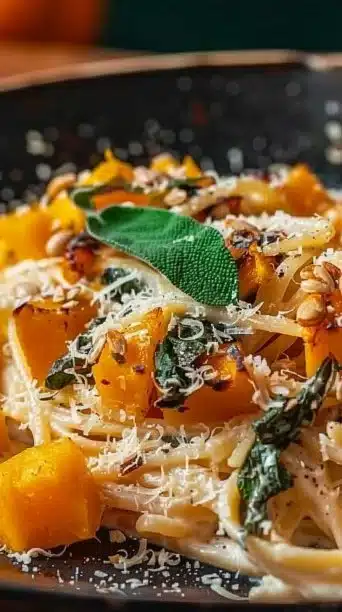
When you roast the squash properly, you’ll see golden-brown edges and a tender interior. In the pan, garlic should sizzle and perfume the kitchen without turning brown; sage leaves should look glossy and slightly crisped. The sauce should be velvety, coating pasta ribbons without puddling heavily on the plate—if it seems too thick, use the reserved pasta water to adjust.
Time-saving swaps and pantry-friendly options
- Use store-bought roasted squash or cubed frozen butternut to skip peeling and cutting. Allow frozen squash to thaw and pat dry to avoid excess water.
- Swap tagliatelle for any pasta you have on hand—bow ties, penne, or rigatoni will all work, though ribbons catch the sauce especially well.
- If you don’t have fresh sage, use 1–2 teaspoons of dried sage but add it earlier in the cooking so it rehydrates and softens.
Presentation ideas
Serve the pasta in shallow bowls with the roasted squash and a flourish of chopped parsley for color. Scatter crushed toasted walnuts for crunch and a final shower of Parm. For a rustic look, leave the sage leaves whole and crisp them in the butter before adding garlic; place a couple on top as a visual accent.
Q&A-style Tips (quick)
Q: What if my sauce gets too thin?
A: Simmer gently to reduce slightly, or stir in a tablespoon of grated Parmesan to thicken and enrich.
Q: Can I roast the squash with spices?
A: Yes—cinnamon and nutmeg are cozy fall partners, while smoked paprika adds a savory smokiness; use sparingly so they don’t overwhelm the sage.
Q: How to toast nuts quickly?
A: Toast walnuts or pecans in a dry skillet over medium heat for 3–5 minutes, shaking occasionally, until fragrant and slightly darker.
FAQs
Q: Can I use pumpkin instead of butternut squash?
A: Yes. Fresh pumpkin can be used similarly; choose a sugar or pie pumpkin for sweetness. Roasting time may vary slightly depending on cube size.
Q: How do I make this gluten-free?
A: Use your preferred gluten-free pasta; cook according to package directions and watch closely for al dente texture since gluten-free pastas can go from firm to mush quickly.
Q: Is leftover pasta safe to eat the next day?
A: Yes—store in the refrigerator in an airtight container for up to 3–4 days. Reheat gently with a splash of liquid to restore creaminess.
Bold question style:
How spicy is this dish? It’s typically mild; add crushed red pepper flakes to taste if you want heat.Short bullet FAQ list:
• Can I freeze the finished pasta? Best not—cream sauces can separate. Freeze roasted squash separately if needed.
• Can I make it vegan? Substitute a creamy plant-based milk and a vegan Parmesan alternative.
• How important is fresh sage? Fresh is strongly recommended for aroma, but dried can work in a pinch.
Troubleshooting common issues
- Sauce splitting: Remove pan from heat and whisk in a cold tablespoon of butter or a splash of cream.
- Squash too watery: Roast longer, spread out on the tray, and increase heat slightly to drive off moisture.
- Pasta sticking together after reheating: Reheat in a skillet with a touch of olive oil or water; toss to separate strands.
Pairings and occasions
This pasta is ideal for cozy nights, family suppers, or as a vegetarian main at casual dinner parties. For a holiday table, add a side of roasted Brussels sprouts and a fragrant dessert like pear tart to keep the seasonal theme. For a weeknight, serve with a brisk, peppery arugula salad and a loaf of warm bread for a complete, fuss-free meal.
Nutrition and portioning
Expect this to be a moderately rich dish because of the cream and Parmesan. To lighten it: use half-and-half instead of heavy cream and increase the roasted squash ratio while reducing the cheese slightly. The dish offers a good dose of vitamin A from squash and beneficial fats if you include nuts.
Final notes on technique
- Keep heat moderate when working with cream and cheese; coaxing rather than forcing the sauce to come together yields a smoother finish.
- Textural contrast (soft squash, al dente pasta, crunchy nuts) is what makes this dish memorable, so pay attention to each component’s doneness and timing.
- Taste as you go—salt late when using Parmesan so you don’t over-salt early on.
Conclusion
If you’re curious about other savory squash-and-sausage combinations, see this hearty take on the theme in Cozy Butternut Squash Pasta with Chorizo & Sage – Well Seasoned, which pairs squash with bold cured meat and similar aromatics. For a sausage-forward bowl that uses the same comforting flavor profile with different textures, check out Butternut Squash, Sage & Sausage Pasta — All Types of Bowls for inspiration and variations.
Print
Butternut Squash and Sage Pasta
- Total Time: 45 minutes
- Yield: 4 servings 1x
- Diet: Vegetarian
Description
A creamy, cozy pasta dish featuring roasted butternut squash and aromatic sage, perfect for autumn evenings.
Ingredients
- 1 medium butternut squash, peeled, seeded, cubed
- 2 tablespoons olive oil
- Salt and black pepper to taste
- 12 ounces fettuccine or tagliatelle
- 2 tablespoons butter
- 3 cloves garlic, minced
- 6–8 fresh sage leaves, chopped
- 1 cup heavy cream or half-and-half
- 1/2 cup grated Parmesan cheese, plus more for serving
- 1/4 teaspoon crushed red pepper flakes (optional)
- 1/4 cup toasted walnuts or pecans (optional garnish)
- Fresh parsley for garnish
Instructions
- Preheat your oven to 400°F (200°C) and toss the cubed butternut squash with olive oil, salt, and black pepper. Spread on a baking sheet and roast for 25–30 minutes until tender.
- While the squash roasts, cook the fettuccine according to package directions. Reserve 1/2 cup of pasta water before draining.
- Melt butter in a skillet over medium heat, add garlic, and sauté for 1 minute. Stir in sage and cook for 30 seconds.
- Pour in the heavy cream and bring to a gentle simmer. Add Parmesan and stir until melted and smooth.
- Combine the cooked pasta with the sauce, then fold in the roasted squash gently.
- Season with salt, black pepper, and red pepper flakes. Serve topped with nuts, parsley, and extra Parmesan.
Notes
For a lighter version, substitute half of the roasted squash for the cream. Store leftovers in an airtight container for 3–4 days.
- Prep Time: 15 minutes
- Cook Time: 30 minutes
- Category: Main Course
- Method: Baking
- Cuisine: Italian
Nutrition
- Serving Size: 1 serving
- Calories: 350
- Sugar: 5g
- Sodium: 400mg
- Fat: 12g
- Saturated Fat: 4g
- Unsaturated Fat: 6g
- Trans Fat: 0g
- Carbohydrates: 45g
- Fiber: 3g
- Protein: 15g
- Cholesterol: 30mg
Keywords: butternut squash, sage, pasta, vegetarian, creamy, autumn recipe