
Sweet Potato and Chickpea Curry: A Cozy, Creamy Plant-Based Delight
Sweet Potato and Chickpea Curry: A Cozy, Creamy Plant-Based Delight
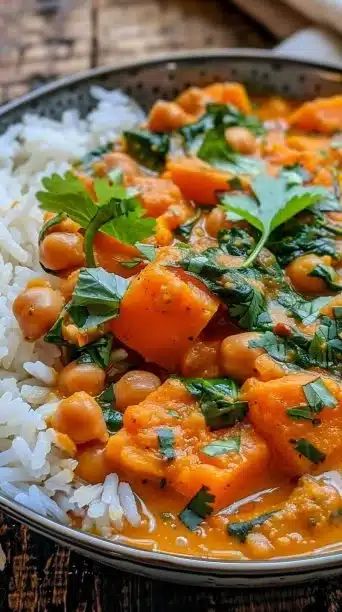
Warm, comforting, and richly spiced, this sweet potato and chickpea curry is the kind of weeknight meal that feels like a hug in a bowl. It’s creamy from coconut milk, bright with ginger and garlic, and effortless to make — perfect for busy evenings or when you want a satisfying plant-based dinner. If you enjoy hearty sweet potato dishes, you might also like this related recipe for a sweet potato and ground turkey bake that brings a different savory twist to tuber-forward cooking.
Why make this recipe
If you’re tired of bland weeknight dinners that leave you hungry two hours later, this curry solves the problem by delivering sustained satisfaction: fiber-rich sweet potatoes and chickpeas keep you full, warming spices make each bite interesting, and the coconut milk creates a creamy finish so you don’t miss dairy. It’s also fast, forgiving, and easy to scale up for leftovers or company.
Ingredients
- 1 tablespoon olive oil or coconut oil
- 1 small yellow onion, diced
- 3 cloves garlic, minced
- 1 tablespoon fresh ginger, grated
- 2 tablespoons red curry paste (or use curry powder)
- 1 tablespoon tomato paste
- 1 teaspoon ground cumin
- 1/2 teaspoon ground turmeric
- 1/2 teaspoon paprika or cayenne (optional)
- 2 medium sweet potatoes, peeled and diced (about 3 cups)
- 1 can (15 oz) chickpeas, drained and rinsed
- 1 can (14 oz) full-fat coconut milk
- 1 cup vegetable broth or water
- 2 big handfuls fresh baby spinach (about 2 cups)
- Salt and pepper to taste
- Fresh cilantro and chili flakes for garnish
Step-by-Step Guide to Making Sweet Potato and Chickpea Curry
Prep your aromatics and veg. Peel and dice the sweet potatoes into roughly 1/2- to 3/4-inch cubes so they cook evenly. Dice the onion, mince the garlic, and grate the ginger. Having everything ready at the start speeds things along and prevents scorching the spices.
Warm the oil. Heat 1 tablespoon of olive oil or coconut oil in a large, heavy-bottomed pot or Dutch oven over medium heat. A wide pot gives you more surface area to develop flavor in the aromatics.
Sweat the onion. Add the diced onion to the pot and cook for about 5 minutes, stirring occasionally, until it becomes translucent and soft. Scrape the bottom of the pot as needed to keep things from sticking.
Add garlic and ginger. Stir in the minced garlic and grated ginger and cook for 1–2 minutes until fragrant. This step releases their aromatic oils and forms the flavorful base of the curry.
Bloom the spices. Add the red curry paste and tomato paste, then sprinkle in the cumin, turmeric, and paprika or cayenne (if using). Stir well and cook the spice mixture for about 1 minute. Cooking the spices briefly helps to bloom their flavors and removes any raw edge.
Add the main ingredients. Pour in the diced sweet potatoes, drained chickpeas, coconut milk, and vegetable broth or water. Stir to combine, scraping any browned bits from the bottom of the pot.
Simmer until tender. Bring the curry to a gentle simmer, then cover and cook for 20–25 minutes, or until the sweet potatoes are fork-tender. Keep the heat low enough that the coconut milk doesn’t boil aggressively — gentle simmering develops flavor and keeps the coconut milk from separating.
Finish with greens and seasoning. Stir in the baby spinach and cook for 2–3 minutes until wilted. Taste and adjust seasoning with salt and pepper. If you like a little brightness, a squeeze of lime or lemon juice can lift the dish beautifully.
Serve and garnish. Ladle the curry into bowls over steamed rice, fluffy quinoa, or beside warm naan. Top each serving with chopped fresh cilantro and a pinch of chili flakes for heat.
Storage Tips for Sweet Potato and Chickpea Curry
- Refrigerate: Store in an airtight container in the fridge for up to 4 days at 40°F (4°C) or below.
- Freeze: Cool completely, then freeze in a freezer-safe container for up to 3 months at 0°F (-18°C).
- Thawing & reheating: Thaw overnight in the fridge, then reheat gently on the stove over low heat, adding a splash of water or broth if the curry has thickened. Reheat to at least 165°F (74°C) before serving.
How to Serve Sweet Potato and Chickpea Curry
Serving Suggestions for Sweet Potato and Chickpea Curry
- Over rice: Serve spooned over steamed basmati or jasmine rice for a classic pairing that soaks up the sauce.
- With flatbreads: Offer warm naan, roti, or tortillas to scoop up chunks and sauce.
- Grain bowls: Build a nourishing bowl with quinoa or brown rice, a scoop of curry, roasted vegetables, and a dollop of yogurt (dairy or plant-based) if desired.
- Toppings: Fresh cilantro, thinly sliced red onion, a squeeze of lime, toasted coconut flakes, or crushed peanuts add texture and brightness.
Tips to make Sweet Potato and Chickpea Curry
Q: How do I keep the curry from tasting flat?
A: Properly bloom your spices and season in layers — season the onions while cooking, then season again after simmering. Finish with an acidic element like lime juice or a splash of vinegar and add fresh herbs for brightness.
Q: Will the coconut milk separate when reheated?
A: Keep reheating gentle and low; if the sauce appears separated, whisk in a little extra coconut milk or broth off the heat to bring it back together.
Q: Can I make this in a slow cooker?
A: Yes — sauté the aromatics briefly, transfer everything to a slow cooker, and cook on low for 4–6 hours. Add the spinach at the end.
Variation (if any)
- Swap the curry base: Replace red curry paste with 2 tablespoons of curry powder and 1–2 teaspoons of garam masala for a drier, earthier flavor profile that still complements the sweet potatoes and chickpeas.
- Add roasted vegetables for texture and depth. For a heartier version, roast cauliflower florets and carrots until caramelized and stir them in at the end — the roasted edges add a satisfying contrast to the creamy coconut sauce.
Why this combination works
The pairing of sweet potato and chickpeas is both nutritional and culinary: sweet potatoes bring natural sweetness, beta-carotene, and a creamy texture when cooked, while chickpeas add nutty flavor, protein, and body to the curry. Coconut milk binds them together with richness, and the spices (ginger, cumin, turmeric, and curry paste) layer warmth and complexity. Spinach lends color and freshness, folding into the sauce without competing with other flavors.
Flavor and texture playbook
- Sweetness vs. heat: The natural sweetness of the potatoes balances the warm, slightly spicy elements from the curry paste and paprika. If you prefer more heat, add serrano or bird’s-eye chiles when sautéing the onions.
- Creaminess vs. acidity: Coconut milk gives a silky mouthfeel; a final squeeze of lemon or lime brightens the overall dish so it doesn’t feel heavy.
- Soft vs. crisp: The soft, fork-tender potatoes and chickpeas contrast nicely with optional toppings like toasted seeds, crispy shallots, or chopped raw vegetables for crunch.
Dietary notes and swaps
- Protein: Chickpeas provide plant-based protein; to up the protein content further, stir in a cup of cooked lentils or cubed firm tofu.
- Oil-free: Skip the oil and use a little water to sweat the onions and aromatics.
- Lighter: Use light coconut milk or reduce coconut milk by half and add more broth to cut calories while keeping flavor.
- No curry paste: If you don’t have red curry paste, use curry powder, paprika, a pinch of cinnamon, and a teaspoon of brown sugar to imitate the sweet-savory balance.
Common mistakes and how to avoid them
- Not cooking the spices: Adding ground spices straight to cold ingredients can leave a raw, powdery taste. Toast spices briefly in the hot oil for best flavor.
- Overcooking potatoes: Large chunks can fall apart if cooked too long. Dice them uniformly and check for doneness with a fork after 20 minutes.
- Bland final dish: Always taste before serving; season in layers and finish with acid and fresh herbs.
FAQs
Q: Can I use canned sweet potatoes instead of fresh?
A: Fresh sweet potatoes give the best texture; canned sweet potatoes are usually mushier and less flavorful. If only canned are available, reduce simmer time and add them near the end to avoid overcooking.
Q: How spicy is this curry if I use red curry paste?
A: Red curry paste ranges in heat by brand. Start with 1–2 tablespoons and taste; you can always add more chili flakes or cayenne if you want extra heat.
Q: Is this recipe meal-prep friendly?
A: Yes, it stores well in the fridge for up to 4 days and freezes for about 3 months. Portion into single-serving containers for easy reheating.
What to pair it with (quick list)
- Basmati rice, jasmine rice, or brown rice
- Warm naan or flatbread
- A simple cucumber-yogurt salad for cool contrast
- Steamed greens or roasted brussels sprouts
A few more cooking tips
- If you want a silkier sauce, use an immersion blender to purée a small portion of the curry (about 1 cup) and stir it back in — this thickens the sauce without losing chunkiness.
- To add a smoky note, stir in 1/2 teaspoon smoked paprika along with the other spices.
- For extra richness, finish with a tablespoon of cashew butter or tahini stirred in at the end.
Nutritional highlights
This curry is naturally gluten-free and plant-based, providing a good balance of complex carbohydrates (sweet potatoes), plant protein and fiber (chickpeas), and healthy fats (coconut milk). It’s also an easy way to boost your vegetable intake with the added spinach and optional extra veggies.
Make-ahead and scaling notes
- To feed a crowd, double the recipe and use a wide, shallow pan to maintain even heat distribution; adjust simmer time slightly if the pot is very full.
- The sauce thickens as it cools, so for leftover meals that will be reheated, add a splash of broth when reheating to loosen the texture.
Leftover reinvention ideas
- Curry-stuffed sweet potatoes: Spoon warmed leftover curry into halved baked sweet potatoes for a double-sweet-potato celebration.
- Wraps: Fill warmed tortillas with curry, rice, and slaw for portable lunches.
- Soupify: Thin leftover curry with vegetable broth and blend for a smooth, spiced sweet potato soup.
Final plating ideas
Arrange a generous scoop of rice in the center of a bowl, ladle curry around it, and top with a handful of cilantro, a wedge of lime, and a sprinkling of roasted sesame seeds or crushed peanuts for visual interest and added texture. Offer extra chili flakes at the table for guests who like more heat.
Conclusion
This sweet potato and chickpea curry is a versatile, soothing meal that bridges comfort-food satisfaction with plant-forward nutrition. For another coconut-rich, cozy chickpea curry with seasonal variation, see this deliciously similar take on a Sweet Potato Chickpea Coconut Curry, and if you enjoy experimenting with squash and pumpkin in one-pot formats, try the autumnal one-pot pumpkin chickpea curry for a different seasonal twist.
Print
Sweet Potato and Chickpea Curry
- Total Time: 45 minutes
- Yield: 4 servings 1x
- Diet: Vegan
Description
A warm, comforting, and creamy plant-based curry made with sweet potatoes and chickpeas. Perfect for busy weeknights.
Ingredients
- 1 tablespoon olive oil or coconut oil
- 1 small yellow onion, diced
- 3 cloves garlic, minced
- 1 tablespoon fresh ginger, grated
- 2 tablespoons red curry paste (or curry powder)
- 1 tablespoon tomato paste
- 1 teaspoon ground cumin
- 1/2 teaspoon ground turmeric
- 1/2 teaspoon paprika or cayenne (optional)
- 2 medium sweet potatoes, peeled and diced (about 3 cups)
- 1 can (15 oz) chickpeas, drained and rinsed
- 1 can (14 oz) full-fat coconut milk
- 1 cup vegetable broth or water
- 2 big handfuls fresh baby spinach (about 2 cups)
- Salt and pepper to taste
- Fresh cilantro and chili flakes for garnish
Instructions
- Prep your aromatics and veg: Peel and dice the sweet potatoes. Dice the onion, mince the garlic, and grate the ginger.
- Warm the oil: Heat olive oil or coconut oil in a large pot over medium heat.
- Sweat the onion: Cook the diced onion for about 5 minutes until translucent.
- Add garlic and ginger: Stir in minced garlic and grated ginger, cooking for 1-2 minutes.
- Bloom the spices: Add red curry paste, tomato paste, cumin, turmeric, and optional spices. Cook for about 1 minute.
- Add the main ingredients: Pour in diced sweet potatoes, chickpeas, coconut milk, and vegetable broth.
- Simmer until tender: Bring to a gentle simmer and cover. Cook for 20-25 minutes until sweet potatoes are fork-tender.
- Finish with greens and seasoning: Stir in baby spinach and cook for 2-3 minutes until wilted. Adjust seasoning with salt and pepper.
- Serve and garnish: Ladle curry into bowls and garnish with cilantro and chili flakes.
Notes
For a silkier sauce, blend a small portion of the curry and stir it back in. Serve with rice or flatbread.
- Prep Time: 15 minutes
- Cook Time: 30 minutes
- Category: Main Course
- Method: Simmering
- Cuisine: Indian
Nutrition
- Serving Size: 1 serving
- Calories: 350
- Sugar: 5g
- Sodium: 400mg
- Fat: 12g
- Saturated Fat: 4g
- Unsaturated Fat: 6g
- Trans Fat: 0g
- Carbohydrates: 45g
- Fiber: 11g
- Protein: 15g
- Cholesterol: 0mg
Keywords: curry, vegan, sweet potato, chickpeas, easy dinner, plant-based