Bomboloni (Italian Donuts)
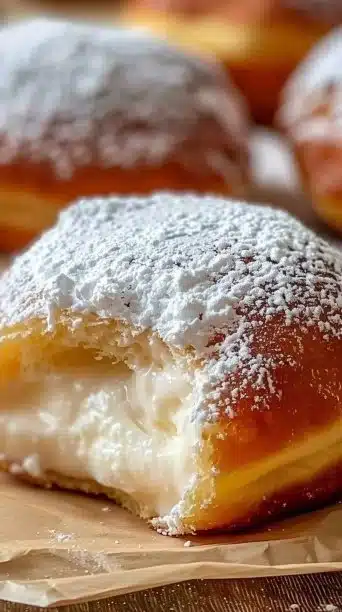
Bomboloni, Italy’s warm, pillowy answer to the donut, taste like little pockets of nostalgia—soft, yeasted dough fried until golden and filled with creamy custard or jam. These treats are perfect for slow weekend mornings or for recreating a street-market moment at home; simple ingredients transform into something utterly irresistible with a little patience and care.
Why make this recipe
If you’re tired of store-bought donuts that are heavy, greasy, or overly sweet, this bomboloni recipe is perfect because it gives you light, airy fried dough with a tender crumb and just the right balance of richness—and you control the filling and finish. It solves the “flavor versus texture” trade-off by using a lightly enriched dough that fries into a thin, crisp exterior and a soft, cloudlike interior. Plus, making bomboloni at home is a chance to slow down, practice classic yeast-bread techniques, and get exactly the filling ratio you love.
Step-by-Step Guide to Making Bomboloni
Ingredients:
- 2 cups all-purpose flour
- 1/4 cup granulated sugar
- 1/2 teaspoon salt
- 2 teaspoons active dry yeast
- 3/4 cup milk, warmed
- 2 large eggs
- 2 tablespoons unsalted butter, softened
- Filling of choice (pastry cream, Nutella, or jam)
- Vegetable oil for frying
- Powdered sugar for dusting
Directions:
- In a bowl, combine warm milk and yeast; let sit until foamy.
- In another bowl, mix flour, granulated sugar, and salt.
- Add yeast mixture, eggs, and softened butter to the dry ingredients; knead into a dough.
- Let the dough rise in a warm place until doubled in size.
- Roll out and cut into circles; let rise again.
- Heat oil in a deep pot; fry dough until golden brown.
- Fill with pastry cream, Nutella, or jam, and dust with powdered sugar before serving.
Detailed, Practical Steps and Technique Notes
- Proof the yeast properly: Warm the milk to about 100–110°F (38–43°C). If your milk is too hot it will kill the yeast; too cool and activation will be slow. Combine the warm milk and yeast in a small bowl and let it sit 5–10 minutes until foamy. If it doesn’t foam, the yeast may be old—start again with fresh yeast.
- Mix and knead: Whisk the dry ingredients in a large bowl to evenly distribute sugar and salt. Add the foamed yeast mixture, eggs, and softened butter. You can mix with a spoon and then knead by hand on a lightly floured surface for 8–10 minutes until the dough is smooth and elastic. If using a stand mixer, knead with the dough hook on medium speed for about 6–7 minutes. The dough should be tacky but not sticky—add tiny pinches of flour if needed.
- First rise (bulk fermentation): Place the dough in a lightly oiled bowl, cover with plastic wrap or a damp towel, and allow it to rise in a warm draft-free area until doubled—about 1 to 1½ hours depending on room temperature. A good trick is to place the bowl in an oven with just the oven light on (don’t use heat).
- Shaping: Gently deflate the dough and turn it out onto a lightly floured surface. Roll to about 1/2-inch thickness. Use a round cutter (2.5–3 inches) to stamp circles. Place circles on a parchment-lined baking sheet with a little space between them for the second rise.
- Second rise (proof): Cover the cut rounds with a kitchen towel or lightly oiled plastic wrap and let them puff up for 30–60 minutes until noticeably puffy. They don’t need to double again—just become airy and soft.
- Frying oil: Use a neutral, high-smoke-point oil such as vegetable, sunflower, or canola. Heat the oil to 350–365°F (175–185°C)—use a candy/deep-fry thermometer. If the oil is too cool, bomboloni will absorb oil and become greasy; too hot and they will brown externally before cooking inside. Fry a couple at a time (don’t overcrowd) for about 2–3 minutes per side until golden brown, turning once.
- Draining: Remove with a slotted spoon and let drain on a wire rack over paper towels to avoid soggy bottoms.
- Filling: Use a piping bag fitted with a long thin tip (or a plain tip if that’s what you have). Insert the nozzle halfway into the side of each bombolone and squeeze in about 20–40 g (roughly 1–2 tablespoons) of filling until you feel slight resistance and the bombolone feels slightly heavier. For jam, warm it a bit so it pipes more smoothly. For Nutella, slightly warm to loosen the spread.
- Finish: Dust with powdered sugar right before serving so the sugar doesn’t dissolve into moisture. Serve warm for the best contrast between crisp exterior and creamy interior.
Timing and Yields
- Active time: ~45–60 minutes (mixing, shaping, frying)
- Inactive time (rising/proofs): ~1½–2 hours total
- Yield: About 10–12 bomboloni depending on cutter size
Storage Tips for Bomboloni
- Room temperature: Store in an airtight container for up to 24 hours at about 68–72°F (20–22°C). Best eaten same day.
- Refrigerator: If filled with pastry cream or other perishable filling, store in the fridge for up to 2–3 days at 36–40°F (2–4°C). Bring to room temperature before serving for best texture.
- Freezer (unfilled): Wrap tightly in plastic and place in a freezer bag for up to 1 month at 0°F (-18°C). Thaw at room temperature and reheat briefly in a 300°F (150°C) oven for 5–8 minutes to refresh the crust.
- Freezer (filled): Not recommended for cream-filled bomboloni, as fillings can separate or change texture; if needed, freeze only for up to 2 weeks and expect some texture change after thawing.
Serving Suggestions for Bomboloni
- Morning ritual: Serve warm with a strong espresso or cappuccino—a classic pairing in Italy where the sweetness complements strong coffee.
- Dessert platter: Slice one open and serve with a dollop of whipped cream and seasonal berries; drizzle with a bit of melted chocolate for an elegant finish.
- Party bites: Make small bite-sized bomboloni and serve on a platter with different fillings—pastry cream, lemon curd, Nutella, and raspberry jam—for guests to sample.
- Brunch idea: Pair with a citrusy salad (oranges and fennel) to cut through the richness and add a refreshing contrast.
tips to make Bomboloni (Q&A style)
Q: How do I keep bomboloni light and not dense?
A: Don’t overwork the dough after the first rise—gently deflate, shape, and allow for a second light proof. Proper yeast proofing and adequate rising times are crucial.
Q: What’s the best oil temperature for frying?
A: Maintain 350–365°F (175–185°C). Use a thermometer and adjust the heat to keep the temperature steady; add the dough pieces one at a time to avoid a sudden drop.
Q: Can I make the dough ahead of time?
A: Yes. You can make the dough, let it rise once, then refrigerate (covered) for up to 24 hours to develop flavor. Bring it back to room temperature before shaping and proofing.
Variations
Classic vs. Baked (comparison-style):
- Classic Bomboloni: Yeasted, fried until golden, then filled and dusted with powdered sugar—real richness and the traditional texture.
- Baked Bomboloni: Brush with melted butter and bake at 375°F (190°C) until golden for a lighter, less oily version; texture is more like a brioche donut and the exterior won’t be crisp in the same way as fried.
Filling substitutions (short paragraph): If you want to change the filling, fruit curds, lemon curd, chocolate ganache, or even savory fillings such as a sweet mascarpone mixture can be used. For dairy-free options, use coconut cream pastry or a nut butter thinned slightly with neutral oil for piping.
Common Troubleshooting and Notes
- If bomboloni absorb too much oil: Your oil is too cool. Increase heat but monitor carefully so they don’t burn. Another cause is over-proofing; very puffy dough can collapse and soak oil.
- If they are raw in the center: Oil temperature is too high, causing the outside to color too fast. Lower the oil temperature and check internal doneness by cutting one open.
- If they don’t rise well: Yeast may be old, or the liquid was too hot/cold. Check yeast freshness and proof in slightly warm, draft-free environment.
FAQs
Q: How long do I fry bomboloni?
A: Fry for about 2–3 minutes per side at 350–365°F (175–185°C) until evenly golden brown.
Q: Can I use instant yeast instead of active dry yeast?
A: Yes, you can use instant yeast—use about 1¾ teaspoons and add it directly to the dry ingredients without proofing first; still use warm milk and monitor rise times.
Q: Are bomboloni gluten-free?
A: Traditional bomboloni use all-purpose wheat flour and are not gluten-free. For a gluten-free version, use a tested gluten-free all-purpose flour blend with xanthan gum, but expect some differences in texture—don’t expect exactly the same chew.
Bolded question style:
What’s the best way to fill bomboloni without overfilling?
Use a piping bag with a long nozzle and inject slowly until you feel slight resistance; weigh or estimate filling amounts (20–40 g) for consistency.
Bullet list mini-FAQ:
- Q: Can I make them ahead? A: Make dough ahead, fry same day for best texture.
- Q: Best cutter size? A: 2.5–3 inch rounds are ideal for classic portions.
- Q: Can I use a stand mixer? A: Absolutely—use the dough hook to knead for a consistent, low-effort result.
Additional tips and expert tricks
- Temperature and timing are your friends: Keep an eye on room and oil temperatures. Warm kitchens proof faster; if your kitchen is cold, use a proofing box (or oven with light on).
- Use a scale: For consistent bombs, weigh dough pieces before shaping—about 45–55 g per bombolone for standard size.
- Make fillings ahead: Pastry cream or curd can be made in advance and chilled; warm slightly before piping for easier filling.
- Safety first: Don’t overcrowd the pot when frying, and keep a lid and baking soda nearby in case of unexpected small grease fires (never use water).
Equipment checklist
- Heavy deep pot or fryer and candy thermometer
- Stand mixer with dough hook (optional)
- Round cutter (2.5–3 inches)
- Piping bag with long thin tip
- Wire rack and baking sheets
Serving and presentation ideas
- Dust with powdered sugar right before serving for the prettiest finish.
- Sprinkle with a mix of powdered sugar and cinnamon for a flavor twist.
- For a decorative look, dip half of each bombolone in melted chocolate and let set before filling.
Conclusion
Trying this bomboloni recipe will reward you with warm, tender, perfectly filled Italian donuts that bring a little market-side magic into your kitchen—if you’d like an alternate traditional approach or more variations, check out this detailed Italian Donuts – Bomboloni Recipe – An Italian in my Kitchen for inspiration. For another excellent set of instructions and tips on shaping and frying, take a look at the recipes and photos at Bomboloni – Italian Doughnuts – Inside The Rustic Kitchen.
Print
Bomboloni
- Total Time: 90 minutes
- Yield: 10-12 servings 1x
- Diet: Vegetarian
Description
Bomboloni are warm, pillowy Italian donuts filled with creamy custard or jam, offering a delightful balance of flavor and texture.
Ingredients
- 2 cups all-purpose flour
- 1/4 cup granulated sugar
- 1/2 teaspoon salt
- 2 teaspoons active dry yeast
- 3/4 cup milk, warmed
- 2 large eggs
- 2 tablespoons unsalted butter, softened
- Filling of choice (pastry cream, Nutella, or jam)
- Vegetable oil for frying
- Powdered sugar for dusting
Instructions
- In a bowl, combine warm milk and yeast; let sit until foamy.
- In another bowl, mix flour, granulated sugar, and salt.
- Add yeast mixture, eggs, and softened butter to the dry ingredients; knead into a dough.
- Let the dough rise in a warm place until doubled in size.
- Roll out and cut into circles; let rise again.
- Heat oil in a deep pot; fry dough until golden brown.
- Fill with pastry cream, Nutella, or jam, and dust with powdered sugar before serving.
Notes
Store bomboloni in an airtight container for up to 24 hours at room temperature. Best served warm.
- Prep Time: 60 minutes
- Cook Time: 30 minutes
- Category: Dessert
- Method: Frying
- Cuisine: Italian
Nutrition
- Serving Size: 1 bombolone
- Calories: 200
- Sugar: 10g
- Sodium: 120mg
- Fat: 10g
- Saturated Fat: 4g
- Unsaturated Fat: 6g
- Trans Fat: 0g
- Carbohydrates: 25g
- Fiber: 1g
- Protein: 4g
- Cholesterol: 40mg
Keywords: Italian donuts, Bomboloni, fried donuts, dessert, pastries