Dandelion Lemon Bars
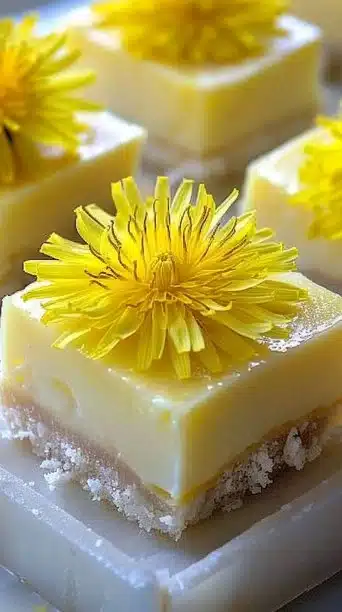
Bright, fragrant, and a little wild — these Dandelion Lemon Bars are a nostalgic nod to backyard foraging and lemony summer afternoons. They pair a tender, buttery shortbread base with a bright, tart lemon custard flecked with delicate dandelion petals for a surprising floral finish. If you loved making simple garden treats as a kid, this one will bring that feeling back in every bite; if you’re new to edible flowers, it’s an approachable introduction (see a related floral bar here: lavender shortbread lemon bars).
Why make this recipe
If you’re tired of the same cookie-and-frosting routine, this recipe is perfect because it invites a seasonal ingredient that’s often overlooked; dandelion petals add subtle floral depth without overpowering the bright lemon custard. It’s also an easy way to turn a common yard flower into an elegant dessert, and the method is forgiving enough for bakers of all skill levels.
Step-by-Step Guide to Making Dandelion Lemon Bars
What makes these special
Combining a classic shortbread crust with a lemon custard is nothing new, but the twist here is the use of fresh dandelion petals. The petals bring a light green-gold fleck throughout the custard, a gentle floral note, and a charming rustic look — all while keeping the lemon as the star. The crust provides a clean buttery frame and the custard bakes up with a tender, creamy set rather than a rubbery, overcooked texture.
Ingredients
- 1 cup all-purpose flour
- 1/2 cup powdered sugar
- 1/2 cup unsalted butter, softened
- 1 cup fresh dandelion petals, washed and dried
- 3/4 cup granulated sugar
- 2 large eggs
- 1/2 cup fresh lemon juice
- 1 tablespoon lemon zest
- 1/4 teaspoon baking powder
- Pinch of salt
Detailed Notes on Ingredients
- All-purpose flour: Provides structure to the crust. For a tender shortbread, ensure the butter is softened but not greasy or melted.
- Powdered sugar in crust: Keeps the crust tender and gives it a finer crumb than granulated sugar.
- Unsalted butter: Control the salt level by using unsalted butter, then balance with the pinch of salt in the filling.
- Dandelion petals: Use only the yellow inner petals (remove green bases and any bitter green parts). Harvest from pesticide-free areas and wash gently.
- Granulated sugar, eggs, lemon juice/zest: These form the bright lemon custard. Fresh lemon juice is far superior to bottled for brightness.
- Baking powder & salt: Small amounts help the custard set evenly and balance flavors.
Directions
- Preheat the oven to 350°F (175°C). Grease an 8×8 inch baking dish.
- In a bowl, mix flour, powdered sugar, and softened butter until crumbly; press into the prepared baking dish to form the crust. For even thickness, press the dough into a flat disk and use the bottom of a measuring cup to smooth it.
- Bake for 15 minutes until lightly golden. Remove from oven but leave oven on.
- In another bowl, whisk together granulated sugar, eggs, lemon juice, lemon zest, baking powder, salt, and dandelion petals. Whisk until the mixture is smooth and the petals are evenly distributed.
- Pour the lemon mixture over the crust and bake for an additional 20–25 minutes until set; the center should jiggle slightly but not be liquid. Avoid overbaking — the custard will continue to firm up as it cools.
- Let cool completely before cutting into bars. Dust with powdered sugar if desired.
How to approach the technique
- Washing dandelion petals: Pluck petals off by pinching at the base and discard the small green bits (they are bitter). Rinse petals in a bowl of cold water, then spin or pat dry. Excess water will thin the custard, so make sure they’re dry.
- Pressing the crust: Pressing firmly and evenly creates a stable base; an offset spatula or the bottom of a measuring cup helps.
- Baking to set: Oven temperatures vary — check for a slight jiggle in center; a toothpick inserted should come out with a few moist crumbs but not wet batter.
Troubleshooting common issues
- Custard too runny after instructed bake time: Your oven may run cool; bake for an extra 3–5 minutes and allow a long cool-down. Refrigerate to speed firming.
- Crust soggy: Bake the crust a little longer (up to 18 minutes) before adding the filling for an extra-sealed base.
- Bitter floral notes: If petals include any green or stem, you’ll get bitterness. Use only the yellow petals.
Best Way to Store Dandelion Lemon Bars
- Room temperature: Up to 24 hours in an airtight container (keep from direct sunlight).
- Refrigerator: 4–5 days in an airtight container; bring to room temperature before serving for best texture.
- Freezer: Up to 3 months; wrap tightly in plastic wrap then in aluminum foil or use an airtight freezer container. Thaw overnight in the fridge, then bring to room temperature.
Serving Suggestions for Dandelion Lemon Bars
- Light dusting of powdered sugar and a scatter of extra fresh dandelion petals for a rustic finish.
- Serve with a dollop of lightly sweetened whipped cream or a spoonful of lemon curd to amplify citrus.
- Pair with green tea, chamomile, or a crisp Prosecco for a spring brunch. The floral notes in the tea or sparkling wine mirror the dandelion petals beautifully.
- For a savory contrast, serve with a cheese plate featuring mild chèvre or ricotta and thin slices of honeyed pears.
Tips to make Dandelion Lemon Bars
Q: How do I keep the custard from cracking?
A: Avoid overbaking and cool the bars gradually at room temperature; a slightly jiggly center when they come out is okay because the custard will set while cooling.
Q: Can I use bottled lemon juice?
A: Fresh lemon juice gives a brighter flavor. If using bottled, zest becomes even more important to restore aromatic oils.
Q: How to prep petals quickly?
A: Gather petals in a bowl, hold the base between thumb and forefinger, and slide the petal out with the other hand; use a small colander and gentle water rinse then spin dry.
Variation (substitutions and ideas)
- Gluten-free crust: Substitute a 1:1 gluten-free baking flour for the all-purpose flour and consider adding 1–2 tablespoons almond flour for better crumb and flavor. You may need to chill the crust dough slightly before pressing if it feels very soft.
- Honey-lemon twist: Replace 1–2 tablespoons of granulated sugar in the custard with mild-flavored honey for a mellow sweetness; this will slightly darken flavor and add depth that complements dandelion petals.
Extra context and ideas for using dandelion petals
- Safety first: Only harvest from areas you know to be pesticide-free, away from roads and treated lawns. If in doubt, do not use.
- Flavor profile: Dandelion petals themselves are mildly floral and slightly sweet; when used in small amounts they enhance lemon flavors rather than compete.
- Seasonal timing: Peak dandelion season is spring to early summer; harvest early in the day for freshest petals.
Baking variations and scaling
- Square to pan conversion: This recipe yields an 8×8 pan (about 9–12 bars depending on size). For a 9×13 pan, double ingredients and increase bake times by roughly 5–8 minutes for crust and 10–12 minutes for custard, checking for set.
- Mini tartlet idea: Press crust into greased mini tart pans and pour custard to create bite-sized lemon-dandelion tartlets; reduce custard bake time to 12–15 minutes.
Presentation and gifting
- For gifting: Wrap cooled bars in parchment paper and tie with twine; include a note about the dandelion petals and storage tips so the recipient knows how special and perishable they are.
- For a rustic party platter: Cut into uniform bars, dust with powdered sugar, sprinkle a few petals on top and arrange alongside lemon slices and edible flowers for a seasonal display.
FAQs
Q: Can I use dandelion leaves instead of petals?
A: No — the leaves are bitter and better used in salads or cooked greens, not in delicate desserts. Only the yellow petals are suitable for this recipe.
Q: How many dandelions do I need to get 1 cup of petals?
A: It depends on size, but approximately 30–50 flowers; smaller or fewer if blossoms are large. Count on hand-plucking petals until you reach the measure.
Q: Do I have to remove the white part at the base of the petal?
A: Yes — remove any green or white base; those parts add bitterness that can overwhelm the lemon.
Bold question style:
What if I don’t have fresh dandelions?
You can omit petals entirely and still have classic lemon bars, or experiment with very finely chopped edible flowers like chamomile or lavender (use sparingly). Freeze-dried petals are less flavorful and can become papery when baked.
Bullet-list FAQ (quick reference)
- How long to cool before cutting? Let the bars cool fully at room temperature, then chill 1 hour for cleaner slices.
- Can I double the recipe? Yes — use a 9×13 pan and adjust bake times as above.
- Are dandelion petals nutritious? They contain small amounts of vitamins and antioxidants but are used primarily for flavor.
Troubleshooting quick reference
- Too-browned crust: Lower oven rack or shield edges with foil on second bake.
- Soggy bottom: Bake crust longer and allow to cool on a wire rack; avoid over-wetting petals.
- Flavor flat: Increase lemon zest by 1/2 teaspoon or add a pinch more salt to elevate flavors.
Final serving and pairing notes
These lemon bars work well for afternoon tea, bridal showers, garden parties, or any time you want a dessert that feels both humble and special. Their bright acid from lemon and buttery base make them versatile: pair with creamy dairy (whipped cream, mascarpone) for contrast, or keep them light with herbal teas and citrus cocktails.
Conclusion
For more inspiration on floral lemon bars and other creative uses for edible blossoms, see this delightful take on Dandelion Lemon Bars with a spring touch at Dandelion Lemon Bars – Tart and Sweet With a Touch of the Spring. If you’re after a classic, ultra-tangy lemon bar technique to compare and adapt, this well-loved recipe provides a dependable method: The BEST Freaking Lemon Bars on Earth Recipe.
Print
Dandelion Lemon Bars
- Total Time: 50 minutes
- Yield: 12 bars 1x
- Diet: Vegetarian
Description
Bright, fragrant Dandelion Lemon Bars combine a buttery shortbread base with a lemon custard flecked with delicate dandelion petals, bringing a nostalgic touch to your dessert table.
Ingredients
- 1 cup all-purpose flour
- 1/2 cup powdered sugar
- 1/2 cup unsalted butter, softened
- 1 cup fresh dandelion petals, washed and dried
- 3/4 cup granulated sugar
- 2 large eggs
- 1/2 cup fresh lemon juice
- 1 tablespoon lemon zest
- 1/4 teaspoon baking powder
- Pinch of salt
Instructions
- Preheat the oven to 350°F (175°C). Grease an 8×8 inch baking dish.
- In a bowl, mix flour, powdered sugar, and softened butter until crumbly; press into the prepared baking dish to form the crust.
- Bake for 15 minutes until lightly golden. Remove from oven but leave oven on.
- In another bowl, whisk together granulated sugar, eggs, lemon juice, lemon zest, baking powder, salt, and dandelion petals until smooth.
- Pour the lemon mixture over the crust and bake for an additional 20–25 minutes until set.
- Let cool completely before cutting into bars. Dust with powdered sugar if desired.
Notes
Ensure dandelion petals are from pesticide-free areas. For better texture, do not overbake the custard.
- Prep Time: 15 minutes
- Cook Time: 35 minutes
- Category: Dessert
- Method: Baking
- Cuisine: American
Nutrition
- Serving Size: 1 bar
- Calories: 250
- Sugar: 15g
- Sodium: 50mg
- Fat: 10g
- Saturated Fat: 6g
- Unsaturated Fat: 4g
- Trans Fat: 0g
- Carbohydrates: 34g
- Fiber: 1g
- Protein: 2g
- Cholesterol: 40mg
Keywords: dandelion, lemon bars, floral dessert, summer treat, foraging