Loaded Butterscotch Cheesecake: A Decadent Dessert That Steals the Show
Loaded Butterscotch Cheesecake: A Decadent Dessert That Steals the Show
This luscious Loaded Butterscotch Cheesecake combines silky cream cheese filling with ribbons of sticky butterscotch, a crunchy graham crust, and a cloud of whipped cream for show-stopping texture and flavor. It’s a dessert that looks like it belongs in a bakery case but is easy enough to make at home for a special dinner or a weekend bake. If you love classic cheesecake with a rich caramel-like twist, this recipe will become your new go-to — and if you want another creamy fruit-forward cheesecake idea, try this creamy fruity cheesecake salad for a fun contrast.
Why make this recipe
If you’re tired of one-note desserts that won’t impress guests or family, this cheesecake solves that problem: it layers creamy, tangy, silky, and crunchy elements in every forkful and finishes with an indulgent butterscotch kick. The water bath ensures a smooth, crack-free top, and the swirls of sauce make each slice visually stunning without complicated piping or tempering. Finally, it’s forgiving: straightforward technique and a reliable chill time mean even intermediate bakers can nail it.
Step-by-Step Guide to Making Loaded Butterscotch Cheesecake
Ingredients:
- 2 cups graham cracker crumbs or digestive biscuits, finely crushed
- 1/2 cup unsalted butter, melted
- 2 tbsp brown sugar
- 24 oz cream cheese, softened
- 1 cup granulated sugar
- 3 large eggs, room temperature
- 1 cup sour cream
- 2 tsp vanilla extract
- 1/2 cup butterscotch sauce plus extra for swirling
- 1 cup whipped cream (for topping)
- 1/2 cup butterscotch sauce (additional for topping)
- 1/2 cup crushed cookies or biscuits (for garnish)
Directions:
- Preheat and prepare the pan: Preheat your oven to 325°F (160°C). Wrap the outside of a 9-inch springform pan with a double layer of heavy-duty foil. This prevents water from the water bath from seeping in during baking. If you prefer extra insurance, run a strip of foil up the sides as well.
- Make the crust: In a medium bowl, combine 2 cups finely crushed graham cracker crumbs (or crushed digestive biscuits), 1/2 cup melted unsalted butter, and 2 tablespoons brown sugar. Stir until the mixture resembles wet sand and holds together when pressed.
- Press and pre-bake the crust: Press the crumb mixture evenly into the bottom (and about 1/4 inch up the sides, if you like) of the prepared springform pan using the bottom of a measuring cup or a flat glass for an even surface. Bake the crust for 10 minutes to set, then remove from the oven and allow to cool slightly while you prepare the filling.
- Prepare the filling base: In a large mixing bowl or stand mixer fitted with the paddle attachment, beat 24 oz softened cream cheese and 1 cup granulated sugar on medium speed until completely smooth and free of lumps, scraping down the bowl as needed so everything is uniform.
- Add the eggs: Add the 3 large eggs one at a time, mixing on low speed after each addition just until combined — overbeating at this stage can introduce air and increase the chance of cracks.
- Incorporate the dairy and flavoring: Blend in 1 cup sour cream, 2 teaspoons vanilla extract, and 1/2 cup butterscotch sauce until just combined and silky. Take care not to overmix; you want a smooth batter without excess air.
- Layer and swirl: Pour half of the cheesecake filling into the cooled crust and spread gently. Drizzle a few generous spoonfuls of additional butterscotch sauce over the top in a loose pattern, then use a butter knife or skewer to create gentle swirls. Pour the remaining filling over the swirled layer, then repeat with another drizzle and swirl to create a marbled effect.
- Prepare the water bath and bake: Place the filled springform pan into a larger baking dish or roasting pan. Carefully pour hot (not boiling) water into the larger pan until it reaches about halfway up the sides of the springform pan — this creates a gentle, moist baking environment that helps prevent cracks.
- Bake until just set: Bake in the preheated oven for 55–65 minutes. The cheesecake should have set edges but a slightly jiggly center when you gently tap the pan. Oven temperatures vary, so start checking at 50 minutes.
- Cool gradually: Turn off the oven, crack the oven door open slightly, and let the cheesecake cool in the oven for 1 hour. This slow cooling minimizes shrinkage and cracking.
- Chill thoroughly: After the hour, remove the cheesecake from the water bath, unwrap the foil, and let it cool to room temperature on a rack. Then refrigerate it for at least 4 hours — overnight is best for clean slicing and fully developed texture.
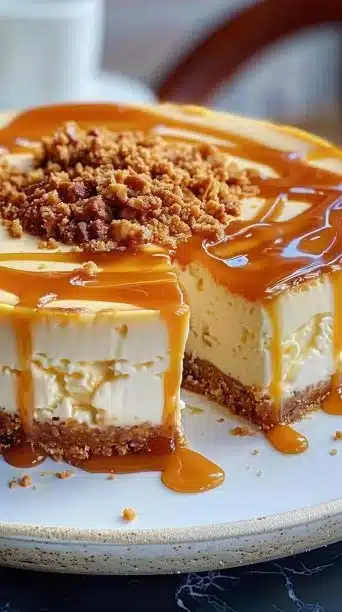
- Finish and serve: Before serving, top the chilled cheesecake with 1 cup whipped cream, extra drizzles of butterscotch sauce (about 1/2 cup more), and sprinkle 1/2 cup crushed cookies or biscuits over the top for crunch. Slice with a hot, clean knife for neat pieces.
Best Way to Store Loaded Butterscotch Cheesecake
- Refrigerate covered: Keep the cheesecake chilled in the refrigerator at 35–40°F (2–4°C).
- Storage time: Store for up to 4 days for best texture and flavor.
- Freeze for longer storage: Wrap slices or the whole cake tightly in plastic wrap and aluminum foil and freeze for up to 1 month; thaw overnight in the refrigerator before serving.
Serving Suggestions for Loaded Butterscotch Cheesecake
This cheesecake is incredibly flexible to serve. For a classic look, plate slices with an extra drizzle of warmed butterscotch sauce and a dollop of whipped cream alongside fresh berries to cut through the sweetness. For a crowd, place the whole cake on a cake stand, pipe additional whipped cream rosettes around the edge, and dust the center lightly with cocoa or a pinch of flaky sea salt. For a picnic or potluck, pre-slice and transport in a shallow container lined with parchment — serve chilled.
Tips to make Loaded Butterscotch Cheesecake
Q: How do I keep it moist and crack-free?
A: Use room-temperature eggs and cream cheese, mix until just combined (avoid whipping in excess air), and bake in a water bath. Cool slowly by leaving the cheesecake in the turned-off oven for an hour before chilling.
Q: Can I replace the store-bought butterscotch sauce?
A: Yes — homemade is lovely (brown sugar, cream, butter, and a splash of vanilla simmered to a sauce), but adjust the salt and thickness to match commercial sauces.
Q: How do I get clean slices?
A: Run a sharp knife under hot water, dry quickly, then slice in one smooth motion. Repeat heating between cuts.
Variations and substitutions
- Oreo or Chocolate Crust (bullet): Swap the graham crumbs for crushed chocolate cookies (Oreos, sans filling) for a chocolatey base that contrasts beautifully with butterscotch. Use the same 2-cup measure and 1/2 cup melted butter — you may reduce brown sugar since cookies are often sweet.
- Salted Butterscotch Swirl (paragraph): For a more sophisticated flavor, use a salted brown butter butterscotch for the swirl and a light sprinkle of flaky sea salt on top just before serving. The salt brightens and balances the sweetness, turning every forkful into a more layered tasting experience.
Frequently Asked Questions
Q: How long should the cheesecake chill before slicing?
A: At least 4 hours, but overnight yields the best texture and cleanest slices.
Q: Can I make this ahead for a party?
A: Yes — make it up to 48 hours ahead for convenience; add the whipped cream topping and cookie garnish just before serving.
Q: Is it necessary to wrap the springform pan in foil?
A: Yes, wrapping in foil prevents water from seeping into the pan during the water bath step and ruining the crust and texture.
What to watch for and troubleshooting
- Lumpy batter: If your batter has lumps after blending cream cheese and sugar, keep beating on medium-low and scrape the bowl frequently. Room-temperature cream cheese is key to a smooth start.
- Overbaking (dry cheesecake): If the center is firm rather than slightly jiggly at the end of bake time, you’ve likely overbaked. Reduce future bake time by 5–10 minutes and rely on carryover cooking from the residual oven heat while it sits in the closed/turned-off oven.
- Soggy crust: If water finds its way into the pan, the crust can become soggy. Use heavy-duty foil and ensure it’s well-sealed, or bake the crust slightly longer to create a stronger barrier before adding the filling.
Advanced tips for show-stopping presentation
- Warm the butterscotch sauce slightly before drizzling to get smooth ribbons.
- Pipe whipped cream rosettes around the rim using a star tip for a bakery-style finish.
- Add a scattering of toasted chopped pecans for an extra-nutty contrast and crunch.
Occasions to serve this cheesecake
Loaded Butterscotch Cheesecake is perfect for holiday dinners, potlucks, birthdays, and any celebration where you want a dessert that looks and tastes indulgent without requiring professional pastry skills. It’s also a great make-ahead dessert for busy hosts because it improves in texture after a full chill.
Nutritional and dietary notes (brief)
This is a rich, indulgent dessert due to the cream cheese, sour cream, butter, and butterscotch. If you need to accommodate dietary restrictions, consider a lower-fat cream cheese alternative (note it may affect texture) or prepare mini cheesecakes to control serving size. For gluten-free adaptation, use gluten-free graham crumbs and certified GF cookies for the garnish.
FAQ section (varied styles)
- Q: Can I halve the recipe? A: Yes, you can halve the recipe and bake in a 6- or 7-inch springform pan, but check baking time earlier — start checking at 35–40 minutes.
- Q: Can I skip the water bath? A: You can, but the water bath significantly reduces cracking and creates a creamier texture, so it’s recommended.
- Q: How do I reheat slices? A: Cheesecake is best served chilled, but if you prefer it slightly warm, let a slice sit at room temperature 20–30 minutes or microwave for 10–15 seconds; be careful not to make the filling too soft.
Final serving reminder
When it’s time to serve, let the cheesecake sit at room temperature for 10–15 minutes so the flavors open slightly and the texture relaxes. Clean, hot knife strokes and a confident plate presentation — extra sauce, contrasting berries, or nuts — will make each slice feel like a restaurant dessert.
Conclusion
If you want a quick roundup of show-stopping desserts that come together easily, check out this roundup to help inspire your next bake: Whip up decadent desserts in just minutes – The Today Show. For a variation on cheesecake that highlights butterscotch and caramel themes, this tested recipe offers useful tips and ideas: Butterscotch Caramel Cheesecake | NESTLÉ® TOLL HOUSE®.
Enjoy your Loaded Butterscotch Cheesecake — whether it’s a weekend treat or the centerpiece of a celebration, it’s sure to steal the show.
Print
Loaded Butterscotch Cheesecake
- Total Time: 80 minutes
- Yield: 12 servings 1x
- Diet: Vegetarian
Description
A decadent dessert featuring a creamy cheesecake filling swirled with butterscotch and a crunchy graham cracker crust, topped with whipped cream.
Ingredients
- 2 cups graham cracker crumbs or digestive biscuits, finely crushed
- 1/2 cup unsalted butter, melted
- 2 tbsp brown sugar
- 24 oz cream cheese, softened
- 1 cup granulated sugar
- 3 large eggs, room temperature
- 1 cup sour cream
- 2 tsp vanilla extract
- 1/2 cup butterscotch sauce plus extra for swirling
- 1 cup whipped cream (for topping)
- 1/2 cup butterscotch sauce (additional for topping)
- 1/2 cup crushed cookies or biscuits (for garnish)
Instructions
- Preheat your oven to 325°F (160°C). Wrap the outside of a 9-inch springform pan with heavy-duty foil.
- In a medium bowl, combine the graham cracker crumbs, melted unsalted butter, and brown sugar. Stir until it resembles wet sand.
- Press the mixture into the bottom of the prepared springform pan and bake for 10 minutes. Allow to cool slightly.
- In a mixing bowl, beat softened cream cheese and granulated sugar until smooth. Add eggs one at a time, mixing on low speed, followed by sour cream, vanilla extract, and butterscotch sauce until just combined.
- Pour half of the cheesecake filling into the crust, swirl in some butterscotch sauce, then pour the remaining filling, repeating the swirl.
- Place the springform pan in a larger baking dish and add hot water halfway up the side of the springform pan.
- Bake for 55-65 minutes until the edges are set but the center is slightly jiggly. Let cool in the oven for 1 hour.
- Remove from the water bath, cool to room temperature, and refrigerate for at least 4 hours.
- Before serving, top with whipped cream, additional butterscotch sauce, and crushed cookies.
Notes
Let the cheesecake sit at room temperature for 10-15 minutes before serving for best flavor and texture.
- Prep Time: 20 minutes
- Cook Time: 60 minutes
- Category: Dessert
- Method: Baking
- Cuisine: American
Nutrition
- Serving Size: 1 slice
- Calories: 400
- Sugar: 30g
- Sodium: 300mg
- Fat: 26g
- Saturated Fat: 15g
- Unsaturated Fat: 8g
- Trans Fat: 0g
- Carbohydrates: 40g
- Fiber: 1g
- Protein: 6g
- Cholesterol: 90mg
Keywords: cheesecake, dessert, butterscotch, creamy, indulgent