Slow Braised Beef Roast With Cranberry Balsamic Glaze
Slow Braised Beef Roast With Cranberry Balsamic Glaze
When cozy weather rolls in, few things are as comforting as a slow-braised beef roast. Imagine a tender piece of boneless chuck, lovingly cooked until it practically falls apart at the touch, bathed in a rich cranberry balsamic glaze that’s sweet, tangy, and bursting with flavor. This dish doesn’t just fill your belly; it warms your heart and home, creating a delightful aroma that invites everyone to gather around the table. Let’s dive into this wonderful recipe that will impress your family and friends alike.
Why Make This Recipe
- Elevated Flavors: The combination of balsamic vinegar and cranberries creates a unique and sophisticated glaze that enhances the beef’s natural richness.
- Perfect for Gatherings: This dish serves as a show-stopper for family dinners or festive celebrations.
- Easy Prep: While it takes some time to cook, the preparation is straightforward, requiring minimal hands-on effort.
Easy Method for Slow Braised Beef Roast With Cranberry Balsamic Glaze
Cooking the perfect slow-braised beef roast may sound intimidating, but rest assured, this method simplifies the process. You’ll create an exquisite dish packed with the comforting flavors of home. Follow these logical steps to guide you through creating your own savory masterpiece.
Step 1: Prepare Your Beef
First things first, let’s get that beautiful beef roast ready for its transformation. Remove your beef chuck roast from its packaging and pat it thoroughly dry with paper towels. This step is crucial for achieving that gorgeous, deeply browned crust we aim for. Moisture on the surface will steam the beef instead of searing it, preventing the development of those rich, caramelized flavors. Once it’s nice and dry, generously season all sides of the roast with your sea salt and freshly ground black pepper. Don’t be shy; this initial seasoning sets the foundation for the entire dish. I often like to rub it in to ensure it adheres well.
Step 2: Sear for Flavor
Now, let’s build some serious flavor! Heat your heavy-bottomed Dutch oven or a large, oven-safe pot over medium-high heat. Add the olive oil, allowing it to shimmer but not smoke. Carefully place the seasoned beef roast into the hot oil. You should hear a satisfying sizzle immediately. Sear the beef for about 4-6 minutes per side, turning with tongs until a deep, dark brown crust forms on all surfaces. This browning, known as the Maillard reaction, is where an incredible amount of flavor develops; it’s really the secret to a rich braise. Once all sides are beautifully browned, remove the beef roast from the pot and set it aside on a plate. You’ll notice some delicious browned bits, or "fond," stuck to the bottom of the pot. Leave these; they are pure gold for our sauce!
Step 3: Sauté the Aromatics
Reduce the heat to medium and add your chopped yellow onion, carrots, and celery to the pot, adding a tiny splash more oil if needed. Cook, stirring occasionally, for about 8-10 minutes, until the vegetables have softened and started to sweeten and lightly caramelize. They should be fragrant and taking on some color from the fond at the bottom of the pot. This step adds layers of fundamental flavor to our braising liquid.
Step 4: Introduce Garlic and Tomato Paste
Push the softened vegetables to one side of the pot and add the minced garlic and tomato paste to the cleared space. Cook the garlic for about 1 minute until fragrant, taking care not to burn it. Then, stir the tomato paste into the garlic and let it cook for another 2-3 minutes, stirring continuously. Cooking the tomato paste briefly helps to deepen its flavor and mellow out its acidity, transforming it from bright to wonderfully rich.
Step 5: Deglaze with Broth
Pour in the beef broth. Immediately use a wooden spoon to scrape up all those flavorful browned bits (the fond) from the bottom of the pot. This is deglazing, and it’s a non-negotiable step for a truly flavorful sauce. Let the broth simmer and reduce by about half, which should take 3-5 minutes. This concentrates the broth’s flavor.
Step 6: Add Liquids and Seasonings
Now, add the low-sodium beef broth, balsamic vinegar (for the braise), Worcestershire sauce, and Dijon mustard to the pot. Stir everything together until well combined. If you’re using smoked paprika, now’s the time to add that too for a subtle smoky depth. Taste the liquid and adjust seasoning if necessary, keeping in mind it will concentrate as it braises.
Step 7: Herb Power and Beef’s Return
Add the fresh rosemary sprigs, thyme sprigs, and bay leaves to the braising liquid. These herbs will slowly infuse the entire dish with their aromatic essence. Carefully return the seared beef roast to the Dutch oven, nesting it into the liquid and vegetables. The liquid should come up about two-thirds of the way up the sides of the roast but doesn’t need to fully submerge it.
Step 8: Prepare for Braising
Preheat your oven to 325°F (160°C). Once the liquid in the Dutch oven comes to a gentle simmer on the stovetop, cover the pot tightly with its lid. A good, tight seal is essential to trap all that steam and moisture, key for tenderizing the beef.
Step 9: The Slow Braise
Transfer the covered Dutch oven to your preheated oven. Let it braise slowly for approximately 3 to 4 hours, or until the beef is incredibly tender and easily shreds with a fork. The exact time will depend on the size and thickness of your roast, so patience is a virtue here. I recommend checking it around the 3-hour mark. You want it fall-apart tender, not just sliceable. During the last hour, you might want to flip the roast once to ensure even cooking and moisture distribution, though it’s not strictly necessary if your liquid level is adequate.
Step 10: Rest the Beef
Once the beef is perfectly tender, carefully remove the Dutch oven from the oven. Using tongs, transfer the beef roast to a clean cutting board or a large plate. Tent it loosely with aluminum foil and allow it to rest for at least 15-20 minutes. This resting period is vital, as it allows the juices to redistribute throughout the meat, ensuring a more succulent and flavorful final product.
Step 11: Strain the Braising Liquid
While the beef is resting, let’s turn our attention to the magnificent sauce. Carefully pour the contents of the Dutch oven through a fine-mesh sieve set over a large heatproof bowl. Press down on the cooked vegetables and herbs in the sieve with the back of a spoon or a ladle to extract every last drop of flavorful liquid. Discard the solids; their work here is done, but their essence lives on in our liquid!
Step 12: Reduce the Braising Liquid
Pour the strained braising liquid back into the now-empty Dutch oven (or a clean saucepan). Bring it to a simmer over medium-high heat on the stovetop. Let it gently bubble and reduce for about 10-15 minutes, or until it has thickened slightly and concentrated in flavor. You’ll notice it becoming a richer color and coating the back of a spoon. This reduction intensifies all the wonderful flavors we’ve built.
Step 13: Prepare the Cranberry Base
In a separate medium saucepan, combine the cranberries, balsamic vinegar (this is the main portion for our glaze!), brown sugar (or maple syrup), the zest and juice of half an orange, and the optional ground cinnamon. Add a small pinch of salt to balance the flavors.
Step 14: Simmer and Thicken the Glaze
Bring the cranberry mixture to a simmer over medium heat. Cook, stirring occasionally, for about 8-12 minutes. The cranberries will begin to burst, releasing their juices, and the mixture will gradually thicken into a glossy, syrupy glaze. As it cooks, the balsamic vinegar will reduce and become sweeter and less acidic, creating a beautiful balance with the tart cranberries. Once it coats the back of a spoon and looks like a thick sauce, remove it from the heat.
Step 15: Combine and Refine the Glaze
Pour the finished cranberry balsamic mixture from the smaller saucepan into your Dutch oven with the reduced braising liquid. Stir thoroughly to combine these two flavorful components. Taste the glaze and adjust the seasoning as needed. It might benefit from a tiny pinch of salt, a dash more balsamic vinegar for brightness, or a spoonful of brown sugar if you prefer it sweeter. This combination creates a truly complex, sweet, savory, and tangy glaze that perfectly complements the rich beef. This Cranberry Balsamic Glaze is truly the star of our Slow Braised Beef Roast.
Step 16: Shred or Slice the Beef
Now that your beef has rested, you have a choice. For a classic shredded pot roast presentation, use two forks to pull the tender beef apart into succulent strands. If your roast is particularly well-braised and you prefer slices, you can carefully slice it against the grain. Either way, it should be incredibly tender and juicy.
Step 17: Coat with Glaze
Return the shredded or sliced beef directly into the Dutch oven with the warm cranberry balsamic glaze. Gently toss the beef, ensuring every piece is beautifully coated in that glistening, aromatic sauce. Allow it to sit in the warm glaze for a few minutes, absorbing all the incredible flavors.
Step 18: Serve and Enjoy
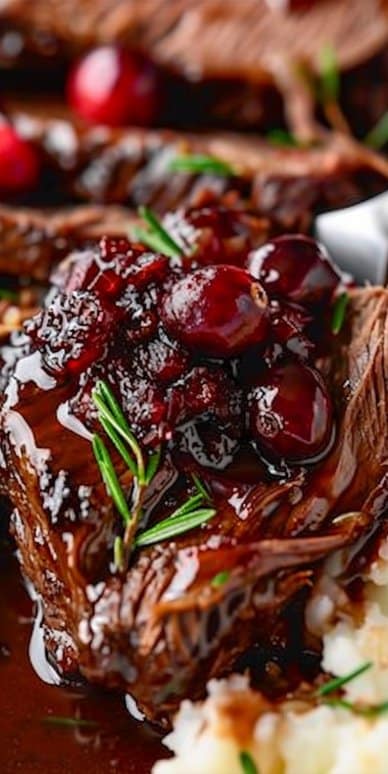
Your Slow Braised Beef Roast With Cranberry Balsamic Glaze is now ready to be the star of your meal! I love serving this dish over creamy mashed potatoes or rich polenta, as they provide the perfect canvas for soaking up all that incredible glaze. It’s also fantastic alongside roasted root vegetables or simple steamed green beans. Garnish with a few fresh cranberry halves or a sprig of fresh thyme for a touch of elegance. This dish is not just a meal; it’s an experience of comfort, depth, and unforgettable flavor. Enjoy every single tender, savory bite!
How to Store Slow Braised Beef Roast With Cranberry Balsamic Glaze
To keep your mouthwatering meal fresh for the days to come, follow these storage recommendations:
- Refrigerate: Store leftovers in an airtight container in the refrigerator for 3-4 days at 40°F (4°C).
- Freeze: For extended storage, freeze the beef and cranberries in a tightly sealed container for up to 2 months.
- Thawing: When ready to enjoy again, thaw overnight in the refrigerator before reheating.
Serving Suggestions for Slow Braised Beef Roast With Cranberry Balsamic Glaze
This hearty beef roast can shine in various ways at your dinner table. The flavors are versatile and can complement multiple sides, bringing them into harmony with its rich, tangy glaze. Here are some serving ideas to elevate your meal:
- Classic Pairing: Serve with buttery mashed potatoes to soak up all the luscious sauce.
- Grain Options: A creamy polenta or a hearty quinoa pilaf provides a nutty base that balances the richness beautifully.
- Vegetable Accompaniments: Roasted root vegetables, like carrots, parsnips, and sweet potatoes, add a slightly sweet contrast to the glaze.
- Fresh Greens: A crisp side salad with arugula tossed in a light vinaigrette offers a refreshing crunch and cuts through the richness of the roast.
- Bread On The Side: Slices of crusty bread or rolls can catch every last drop of glaze, ensuring none of it goes to waste.
Tips to Make Slow Braised Beef Roast With Cranberry Balsamic Glaze
- Patience is Key: Allowing the beef to rest before slicing ensures tender and juicy results.
- Use Fresh Herbs: Fresh herbs enhance flavor more than dried ones, but if you’re in a pinch, dried herbs can work too. Just use about one-third of the amount.
- Flavor Variability: Feel free to adjust the sweetness of your glaze by experimenting with the amount of brown sugar or maple syrup.
- Make It Spicy: For a bit of extra heat, consider adding a dash of red pepper flakes to the braising liquid.
Variations or Substitutions
If you’re looking for a twist on this traditional dish, here are a few variations you can try:
- Different Meats: While chuck roast is ideal, you could substitute with brisket or short ribs for different textures and flavors.
- Fruit Options: Instead of cranberries, consider using pitted cherries or figs for a unique flavor profile. This will give the glaze a different fruitiness that can be delightful.
FAQs
Q: Can I make this ahead of time?
A: Yes! This dish is perfect for making ahead. The flavors actually deepen over time, making the roast even more delicious the next day.
Q: Can I use chicken instead of beef?
A: You can certainly adjust the recipe to use chicken, especially thighs. Just reduce the cooking time accordingly as chicken cooks faster than beef.
Q: How do I make it spicier?
A: You can add diced jalapeños or cayenne pepper to the braising liquid for an extra kick. Adjust the amount to your heat preference.
Q: Can I use frozen cranberries?
- Yes! Frozen cranberries work well in the glaze, as they will burst during cooking, providing the same flavor as fresh ones.
As you embark on making your Slow Braised Beef Roast With Cranberry Balsamic Glaze, remember that cooking is as much about the journey as it is the destination. Relish the nurturing process, savor the aromas wafting through your kitchen, and most importantly, enjoy the delectable meal you’ve created that brings loved ones together—one tender bite at a time.
Print
Slow Braised Beef Roast With Cranberry Balsamic Glaze
- Total Time: 270 minutes
- Yield: 6 servings 1x
- Diet: None
Description
A comforting slow-braised beef roast with a rich cranberry balsamic glaze, perfect for gatherings and cozy dinners.
Ingredients
- 2–3 pounds boneless chuck roast
- 2 tablespoons olive oil
- 1 yellow onion, chopped
- 2 carrots, chopped
- 2 celery stalks, chopped
- 4 cloves garlic, minced
- 2 tablespoons tomato paste
- 4 cups low-sodium beef broth
- 1/2 cup balsamic vinegar
- 2 tablespoons Worcestershire sauce
- 1 tablespoon Dijon mustard
- 1 teaspoon smoked paprika (optional)
- 2 sprigs fresh rosemary
- 2 sprigs fresh thyme
- 2 bay leaves
- 1 cup cranberries
- 1/4 cup brown sugar (or maple syrup)
- Zest and juice of 1/2 orange
- 1/4 teaspoon ground cinnamon (optional)
- Salt and pepper to taste
Instructions
- Prepare your beef by patting it dry and seasoning with salt and pepper.
- Sear the beef in olive oil until a brown crust forms.
- Sauté the onion, carrots, and celery until softened.
- Add garlic and tomato paste; cook until fragrant.
- Deglaze the pot with beef broth, scraping up fond.
- Add broth, balsamic vinegar, Worcestershire sauce, mustard, and smoked paprika.
- Add herbs and return seared beef to the pot.
- Preheat oven to 325°F (160°C) and cover the pot to braise.
- Braise for 3-4 hours until tender.
- Let the beef rest for 15-20 minutes.
- Strain braising liquid and reduce on stovetop.
- Simmer cranberries with balsamic vinegar, brown sugar, and orange juice until thick.
- Combine cranberry mixture with reduced braising liquid.
- Shred or slice beef and coat with glaze.
- Serve with preferred sides.
Notes
For best results, let the beef rest before slicing. Fresh herbs provide better flavor than dried ones.
- Prep Time: 30 minutes
- Cook Time: 240 minutes
- Category: Main Course
- Method: Braising
- Cuisine: American
Nutrition
- Serving Size: 1 serving
- Calories: 420
- Sugar: 12g
- Sodium: 500mg
- Fat: 18g
- Saturated Fat: 6g
- Unsaturated Fat: 10g
- Trans Fat: 0g
- Carbohydrates: 32g
- Fiber: 3g
- Protein: 35g
- Cholesterol: 90mg
Keywords: beef roast, slow braise, cranberry glaze, comfort food, holiday meal